


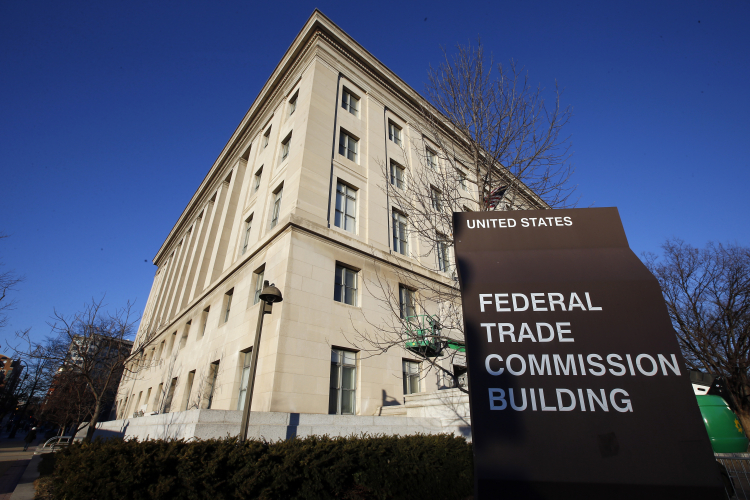
The Federal Trade Commission’s war on alleged Big Tech monopolies suffered a major defeat last month, when a judge ruled in favor of Meta at trial.
But the FTC’s troubles might not be over yet: In continuing to pursue cases using former Biden FTC Chair Lina Khan’s European Union-esque approach to antitrust, the FTC could be setting itself up for more pain. Future losses would likely include FTC’s case against Amazon, where the agency alleges that Prime customers want to unsubscribe from the service but that Amazon makes it too complicated. That allegation is despite the fact that the biggest outrage directed at the retail giant this year came when its servers went down, delaying Prime deliveries and forcing customers to shop with other retailers for 48 hours.
The FTC – along with 46 U.S. states, the District of Columbia, and Guam – sued Meta in late 2020, accusing the company of creating a monopoly through its acquisitions of Instagram and WhatsApp.
But on Nov. 18, U.S. District Judge James Boasberg ruled the government hadn’t proved its case. He compared the tech industry to an ever-changing river with new companies and products regularly arriving and departing the market. Meta was still known as Facebook when the suit was originally filed.
“The FTC has understandably struggled to fix the boundaries of Meta’s product market,” wrote Boasberg. “Even so, it continues to insist that Meta competes with the same old rivals it has for the last decade…”
In perhaps the most noteworthy part of his ruling, Boasberg assessed that video content was the biggest draw for users of social media networks. He found it strange the FTC wanted to keep YouTube and TikTok out of its complaint against Meta because the apps share similar features and layouts. TikTok is also considered Meta’s top competitor. The FTC considered Snapchat and MeWe, two slightly lesser known apps, to be Meta’s main competition.
That narrow market definition was a key part of why the case collapsed, said Jennifer Huddleston, a senior fellow in technology policy at the Cato Institute. She argued the FTC has been trying to shift antitrust policy away from its long-running consumer-welfare standard toward something more ideological.
The “new” standard pioneered by the “neo-Brandeisian movement” seeks to use the federal government to crack down on private business power. Legal experts say it is much closer to the antitrust approach used in the European Union.
One of its most prominent champions was Khan, who recently joined New York City Mayor-elect Zohran Mamdani’s transition team. Trump once called Mamdani “a communist;” Mamdani self-describes as a “Socialist” and is a member of the Democratic Socialists of America. Khan is a US citizen, but was born and partly raised in the United Kingdom, where antitrust law is largely a European Union copycat.
Meanwhile, the Justice Department’s antitrust division is run by Gail Slater, an antitrust lawyer who immigrated from Ireland—a European Union member directly subject to its antitrust law. Slater was previously an adviser to Vice President JD Vance, who has called himself a “Khanservative.”
Vance pushed Trump’s transition team hard to continue Khan and Slater’s approach. This is even though Trump has aligned himself with tech companies against Khan-friendly voices. His support of cryptocurrency and AI won him backing from Silicon Valley during the 2024 election, and as the founder of Truth Social, he is himself a tech entrepreneur who could potentially be harmed in future by the “Neo-Brandeisian” approach.
It’s unclear where the FTC could go from here, though critics say that the Meta defeat argues for nixing or settling the case against Amazon before another embarrassing loss is sustained.
In speaking about the loss, Neil Chilson of the Abundance Institute hoped the fight was over. “This is a good excuse for [Ferguson] to blame the terrible judge and [moving forward look to] conserve agency resources,” he said.
Others were less convinced.
“I don't think the government will be deterred by this loss,” Corbin K. Barthold, Internet Policy Counsel with TechFreedom, told me. “So long as tech companies remain unpopular in MAGA circles, the litigation, here and elsewhere, will continue.”
One unknown factor is how much Trump’s worry about high costs of living, and the attendant consequences for the 2026 midterms and the potential for him being impeached a third, fourth, or fifth time, might factor into his marching orders given to the FTC and DOJ antitrust division.
Of note, most Big Tech services are free—or cheap, like Prime. A recent study found that Amazon offers the lowest prices of any US retailer, including Walmart.
In addition, FTC continuing its case and failing to notch a win would entail more expenditure of taxpayer dollars that will never be recouped. That would come against a backdrop of heightened worry about the national debt and the budget deficit, which make cutting interest rates less tenable.
If Trump wants to oppose Mamdani-style industrial policy, lean into measures that reduce voter panic about affordability, and constrain government waste, he may need to consider stopping wasting taxpayer dollars chasing antitrust goals which punish cheap or free platforms and tech services Americans rely on every day.
Taylor Millard is a writer in Virginia. His work has featured in the Washington Examiner, Daily Caller, DC Journal, Real Clear Politics, and Real Clear Policy, among other publications.
Read Full Article »
