


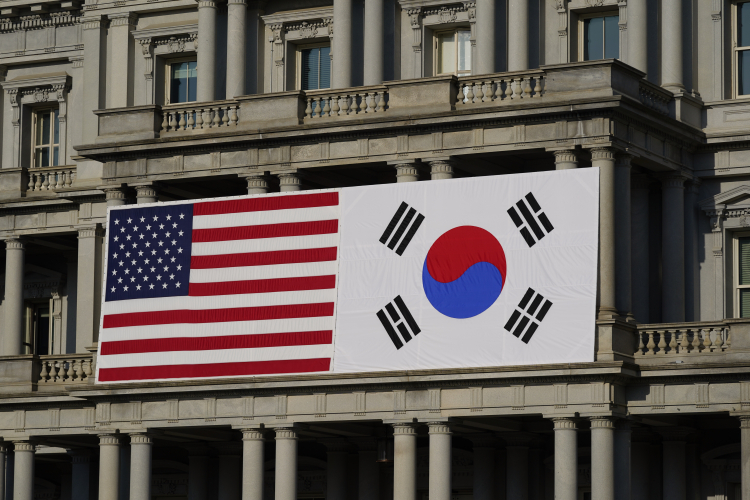
For decades, the United States and South Korea have maintained one of the world’s most important economic and security alliances.
That partnership now faces its most serious test in a generation — not over military deployments or regional security, but over something far more fundamental: whether South Korea has been working to intentionally harm American companies operating in South Korea.
The House Judiciary Committee’s newly announced investigation into South Korea’s treatment of U.S. firms, including Seattle-based tech company Coupang, signals that Congress is no longer willing to ignore the issue.
Lawmakers from both parties appear increasingly frustrated by what they see as discriminatory treatment of American companies that compete with powerful Korean conglomerates.
The South Korean government should be prepared for a hefty dose of sunlight. Subpoenas mean thousands of internal records, including communications, investigative files, and enforcement decisions, could soon become public.
Judiciary Committee leaders hope to determine whether President Lee Jae-myung’s government orchestrated a whole-of-government assault on Coupang under the guise of responding to an objectively limited data breach. They also hope to find out whether the South Korean government is increasingly targeting American companies with discriminatory regulations and politically motivated enforcement decisions.
The Coupang incident appears to be a pretty simple case. From what we know, a former employee accessed low-sensitivity customer data like phone numbers and addresses. No financial data or passwords were compromised. Nothing was leaked externally. The threat actor was caught and admitted he was simply trying to make a point to his former employer — not leak any data. Independent cybersecurity firms confirmed there has been no harm to customers.
Despite this, President Lee and his government described Coupang as having “the largest breach in South Korea’s history affecting 80% of the adult population.” They mobilized hundreds of personnel from eleven government agencies to launch investigations into Coupang and have held multiple National Assembly hearings to grill Coupang executives, including American citizens. South Korean lawmakers have even threatened to “bankrupt” Coupang and press criminal charges against its U.S.-citizen executives.
The contrast with Seoul’s response to far larger breaches involving domestic or Chinese companies — including incidents tied to SK Telecom, Kakao, and Alibaba — is difficult to ignore.
As part of the Coupang probe, the House Judiciary Committee will investigate South Korea’s systemic pattern of dishonesty across this saga, including actions by South Korea’s National Intelligence Service (NIS) — South Korea’s version of the CIA — and senior government officials, including the Prime Minister and the Trade Minister, who have promoted a different narrative in the press.
Documentary evidence in investor lawsuits shows the NIS directed Coupang to recover the stolen customer data from the threat actor. Despite a successful recovery mission, the NIS has publicly denied working with Coupang and has referred the company and its U.S. executives for criminal charges.
If congressional investigators confirm that South Korea’s intelligence service is lying and that American citizens are being subjected to baseless criminal prosecution, the reverberations will extend far beyond one company. It would represent a fundamental breach of trust between allies that could undermine the broader U.S.–Korea economic and security partnership.
The House Judiciary Committee digging in should be a severe warning for South Korea.
Another focus of the probe is the Korea Fair Trade Commission, which critics argue has weaponized regulatory enforcement against U.S. technology firms through disproportionate fines, raids, and investigations while shielding domestic competitors.
The disparities are striking. Google Maps still cannot operate fully in South Korea, while domestic rival Naver faces fewer restrictions. Meanwhile, companies such as Netflix and Meta have faced aggressive enforcement actions over alleged violations that critics say are inconsistently applied.
If proven, such conduct could conflict with South Korea’s commitments under the U.S.–Korea trade agreement to avoid discriminatory regulation of American businesses.
Congressional oversight represents a significant escalation, including the possibility of subpoenas, public hearings, legislative remedies, and sanctions. It also means every investigation, criminal complaint, and related record that Coupang has exchanged or received from the South Korean government will be submitted as part of the investigation.
That information could fundamentally reshape how Washington views Seoul.
The timing is consequential. President Trump has imposed 25% tariffs on South Korea for failing to meet trade commitments and the U.S. Trade Representative has threatened Section 301 investigations over proposed legislation that would disproportionately impact U.S. companies. Vice President JD Vance personally asked Prime Minister Kim to de-escalate attacks on U.S. firms. Major American investors have filed lawsuits alleging regulatory abuse.
For South Korea, the message is straightforward: protecting domestic champions at the expense of treaty obligations carries consequences.
Allies depend on trust. And when governments appear to use regulatory power as an economic weapon that trust erodes quickly.
Congress is now preparing to determine whether that line has been crossed.
Drew Johnson is a tech and budget policy analyst, government watchdog, and political columnist. He is currently a candidate for Nevada State Treasurer.
Read Full Article »