


There’s a certain class of commentator—overrepresented on cable panels and cocktail parties—that insists the central question of our moment is tone. Not outcomes. Not deterrence. Not whether fewer people die. Tone.
Which is how we end up in the peculiar position of litigating the president’s phrasing while largely ignoring the far more relevant question: does it work?
This isn’t an argument for crudeness as a virtue. It’s an argument for weighing costs and benefits as a higher moral obligation.
We’ve run the “measured, respectful, diplomatic” playbook for decades. Forty-seven years, give or take. And what has it yielded? More proxy wars. More state-sponsored terrorism. More hostage crises. More regimes chanting “Death to America” (without apparent objection from the “tone matters” crowd), while steadily improving their missile range and nuclear capability. Allies without militaries that we must pretend are equal partners. Insisting on refined language in the face of those results stops looking like principle and starts looking like irresponsibility, cowardice, or stupidity.
Civil language presumes a civil audience. That’s not a controversial statement—it’s just reality. Diplomats respond to nuance. Allies respond to reassurance. But ideologues—especially the kind who come from a hyper masculinized culture where you’re not taken seriously until you’re talking about ripping off heads and crushing countries—don’t parse tone. They parse strength. They test boundaries. And they respond, when they do respond, to clarity backed by credible consequence.
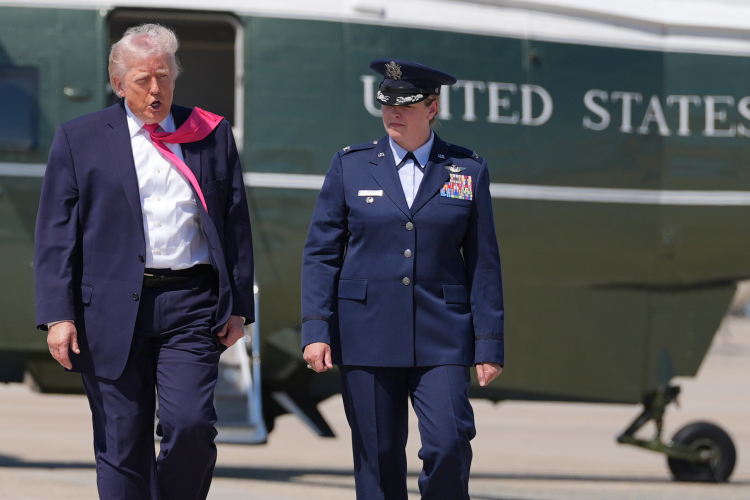
Which brings us back to Trump. His tweets have never been mistaken for Lincoln’s prose, and that’s precisely the point his critics can’t seem to process. When he warned adversaries in stark, unvarnished terms—whether about “fire and fury” or that “any attack… will be met with an attack 1,000 times greater”—the message wasn’t crafted for the editorial page. It was crafted for an audience that takes bluntness seriously because it signals something they understand: resolve.
You can argue with the strategy. You can question the calibration. But to fixate on the lack of polish while ignoring the potential for deterrence or the track record of moving the ball down the field is to miss the game entirely.
What’s truly strange is the asymmetry of outrage. The same voices that get the vapors over an American president’s phrasing often seem curiously unperturbed by regimes and movements openly chanting for America’s destruction. Apparently, “Death to America” is just background noise—but a sharp-edged tweet is a five-alarm fire.
That’s not sophistication. That’s miscalibrated idiocy, and time to check the moral compass.
If harsh words help prevent harsher realities—if they make an adversary think twice, pause, recalibrate—then they aren’t the problem. They’re part of the solution. There’s nothing virtuous about sounding refined if the result is more chaos, more terror, more loss. Lives are not improved by better adjectives.
Of course, tone has its place. In diplomacy, in coalition-building, in sustaining alliances, language matters, and there are times when one wishes the president differentiated more. But we shouldn’t pretend that the same linguistic toolkit applies to every audience. It doesn’t. And insisting that it must is less a sign of moral clarity than of moral confusion.
Because at the end of the day, preferring polite words—and ongoing bloodshed—over blunt language that might actually move us towards ceasefires, deals, and peace isn’t just naïve. It’s a warped moral compass.
Heather R. Higgins is the founder of Suasion Insights and the CEO of Independent Women’s Voice and Chairman of Independent Women.
Read Full Article »