


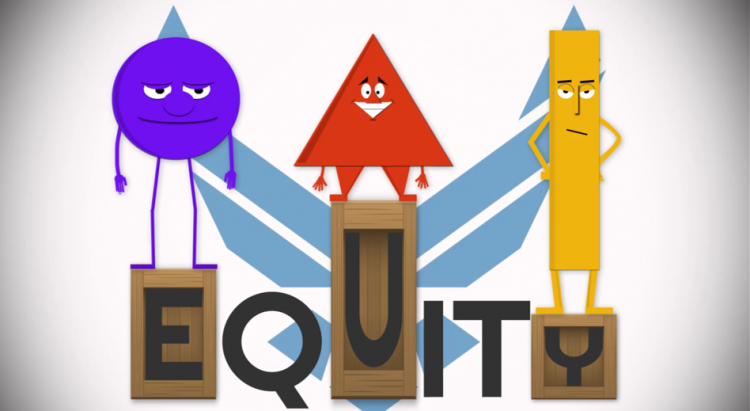
Let's start with the good news.
Between January 2023 and May 2025, Fortune 100 companies reduced their use of the term "DEI" by ninety-eight percent according to an analysis by Gravity Research. Within weeks of President Trump's January 2025 executive order targeting federal DEI initiatives, forty corporations made public changes to their diversity policies. Major corporations including McDonald's, Walmart, and Target announced they were ending DEI programs.
Ding, dong, DEI is dead! Conservatives celebrated as one company after another backed away from the acronym that had dominated (and in many cases, terrified) corporate America for years.
That celebration was premature.
Infrastructure Outlives Acronyms
DEI is far from dead. Like something out of a horror movie, it’s shapeshifting. According to “inclusion consultant” Lily Zheng, its disguise is now called FAIR: Fairness, Access, Inclusion, and Representation. "It's not just a communications rebrand," Zheng told Time Magazine a few weeks ago. "It's not just that we're avoiding the letters DEI and trying to replace it with FAIR. It's that the work itself is evolving."
What Zheng calls "legacy DEI" focused on visible programs like heritage months, diversity training sessions, and demographic targets. These programs were public-facing, easy to identify, and therefore vulnerable to political pressure. The new approach abandons surface visibility in favor of what Zheng calls "systems-based" work.
Instead of counting the number of women or people of color in leadership positions, FAIR focuses on changing institutional systems. Instead of heritage celebrations, FAIR embeds what it calls "inclusion" into hiring algorithms, promotion processes, and organizational structures. The goal is no longer to showcase diversity initiatives. The goal is to make those initiatives invisible and permanent.
This fits the pattern I describe in The Political Vise. In my book, I note how progressives adapted after losing Virginia elections in 2021. Teachers' unions suffered a historic defeat. Rather than retreat, Data for Progress and similar groups spent millions analyzing voter habits and anxieties, then redesigned their campaign around different messaging. By 2023, Democrats won nearly every close Virginia race. Progressives don't abandon goals when challenged. They simply adapt their methods. Similarly, when conservatives successfully challenged outrageously unconstitutional explicit DEI programs, the machinery didn't dismantle. It burrowed deeper into institutional foundations where it becomes harder to identify and harder to remove.
Companies dropped "DEI" and adopted phrases like "universal fairness," "algorithmic bias mitigation," and "inclusion-by-design." The framing shifted from blatant identity-based preferences to much more subtle process-based interventions.
The substance remained the same.
The Politics of Permanent Grievance
In my book, I describe Group Identity Politics as organizing around grievance rather than achievement. Four principles govern grievance politics. Grievances cannot be soothed by prosperity. Grievances fester by nature. Grievances can be manufactured and sustained. Grievances become glue binding people to political causes.
These principles explain why DEI programs can never declare victory and dissolve. If equity were achieved, the machinery would become unnecessary. The system requires permanent grievance to justify permanent intervention.
Legacy DEI focused on representation metrics that could theoretically be satisfied. FAIR abandons those metrics in favor of systemic analysis that can never be completed. There are always more systems to audit, more processes to redesign, more barriers to identify, and more marginalized people to uplift. Heritage celebrations were visible, (theoretically) voluntary, and time-bound. Systemic transformation is invisible, mandatory, and endless. A company can cancel a heritage month event, but it cannot skip the algorithmic audit hardwired into its hiring platform.
President Trump's January 2025 executive order targeting federal DEI programs triggered the strategic retreat. The grievance lobby, however, wasn’t giving up without a fight. They demanded that companies and public institutions find other ways to keep DEI alive. The progressive Vise squeezed, and corporations complied. By January 2026, when Zheng described the FAIR framework to Time magazine, the evolution was complete. Far from being eliminated, DEI had been slickly redesigned to survive legal challenges.
The March 2026 Executive Order requiring federal contractors to certify they do not engage in discriminatory activities based on race or ethnicity suggests the Trump Administration recognizes the evasion. The order y notes that "some entities continue to engage in DEI activities and often attempt to conceal their efforts." But just prohibiting "disparate treatment based on race or ethnicity" can't root out systems-based approaches that claim to focus on universal fairness while pursuing the same demographic outcomes through different methods.
DEI under any name serves the larger goal of institutionalizing learned helplessness. It teaches that your struggles result from discriminatory systems rather than personal choices. It teaches that flourishing depends more on institutional intervention than individual effort. Worst of all, it teaches dependence. And a lot of progressives are deeply invested in maintaining that dependence.
Eliminating DEI departments and scrubbing corporate websites of diversity language is satisfying. It is not final victory, not when the actual work of grievance culture and Group Identity Politics continues under different names, embedded ever deeper in systems that most employees never see and cannot easily challenge.
With the grievance machinery adopting ever more subtle disguises, the fight to defend merit requires more shrewdness and patience than ever before. We must ask direct questions. When companies rebrand DEI programs as "universal fairness" initiatives, we must demand to see the metrics. When they tout "algorithmic bias audits," ask what disparities trigger intervention -- and what outcomes those interventions produce.
The left hid the machinery underground because the surface became too costly to defend. It is time to drag DEI back up into the light, and destroy it once and for all.
Read Full Article »
