


It is no secret that Americans continue to be squeezed by high housing costs. President Trump and Congress recognize the need to solve this kitchen table issue. Their biggest roadblock? Housing affordability is driven largely by state and local policies that limit supply and drive up costs, leaving Washington with relatively few effective tools at its disposal.
A bipartisan housing bill snaking through Congress, if done correctly, can make a difference, but there are better ways to build more housing.
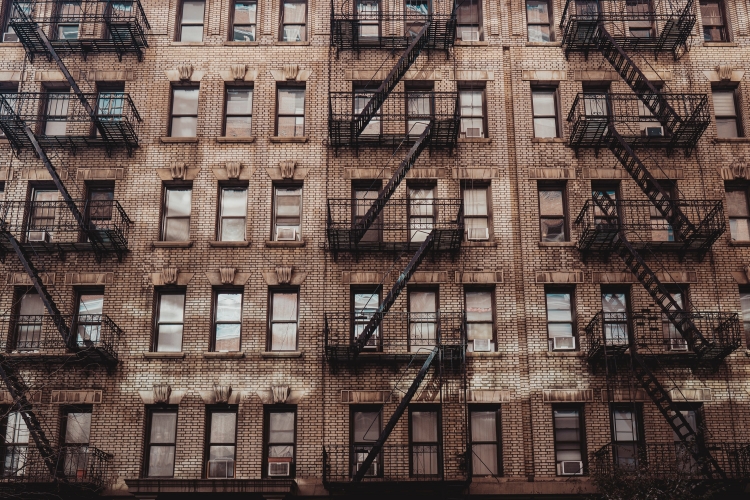
Rents and mortgages have ballooned in many areas due, in large part, to government-imposed barriers that make it nearly impossible to build. This includes requiring apartment buildings to have parking lots, height restrictions to reduce shadows on streets, and years-long environmental reviews—all of which prevent builders from bringing units online in an efficient and cost-effective manner. New York City, the model for how not to build housing, suffers from a number of harmful policies like rent control and a tax credit for builders that construct apartment buildings under 99 units.
These regulations stifle new home building and have created a persistent gap between housing supply and demand, and ultimately put financial pressure on the wallets of working-class Americans. In fact, a new report shows the supply deficit widened to an estimated 4.03 million homes last year from 3.80 million in 2024.
Until these barriers are addressed, millions of families will continue to suffer from the country’s lack of affordable housing.
The bipartisan housing bill in Congress, the 21st Century ROAD to Housing Act, attempts to fix some of these local issues. It requires a new federal report on how localities should reform their zoning laws, and adjusts the National Environmental Policy Act to reduce red tape for building, and harmonizes other regulations across the federal bureaucracy. It also eliminates a silly requirement for manufactured homes that they be built with a permanent chassis, a regulation that raises home prices by upwards of 10%.
That’s really where the good news ends. That bill includes hundreds of millions of dollars for new grants and subsidies that will likely be squandered. It expands more government-backed loan limits, which will leave taxpayers on the hook for more liabilities. Ultimately, the bill will likely have a negligible impact on housing construction, but it will make for good campaign messaging.
The best news for renters and homebuilders is what was left on the cutting-room floor. The House wisely removed a Senate-passed provision that would have effectively crippled the build-to-rent sector and imposed unprecedented federal restrictions on single-family rental housing. That iteration prohibited a “large institutional investor”—such as investment funds, corporations, partnerships, and most other for-profit entities—from owning more than 349 single-family homes and required the sale of build-to-rent properties after seven years. This Venezuela-style policy would have discouraged investment in new housing, reduced rental supply, and made it harder to meet growing demand.
The vast majority of single-family homes in the United States are owned by individual homeowners, not Wall Street firms. Even still, there are real people and families that live in these build-to-rent apartments or single-family homes. In fact, even the threat of this idea becoming law has chilled the industry already. As the Wall Street Journal recently reported, $3.4 billion worth of build-to-rent homes construction is frozen—that’s roughly 10,000 housing units in jeopardy of not being built. In Arizona and Texas, 300 homes about to start construction are on pause.
Credit is due to House Financial Services Committee Chairman French Hill (R-La) for removing this heavy-handed regulation from the bill and preserving a key source of new housing construction.
In addition to avoiding harmful housing restrictions, if Congress wants to make an immediate impact on construction costs it would roll back the president’s harmful tariffs. These import taxes are directly raising the cost of building single-family homes and multi-family housing units.
This includes tariffs on copper and steel used in pipes and electrical parts, softwood lumber used in the majority of home frames, and quartz countertops, which are used in 36% of kitchens. Even appliances like washing machines are taxed. The homebuilders may be paying the tax at first, but these added costs ultimately get passed along to renters in the form of higher rents or home buyers in the form of a higher home purchase price.
The most effective solution to high housing costs is also the simplest: make it easier and less expensive to build more homes. Until policymakers embrace that reality, housing affordability will remain out of reach for too many Americans.
Read Full Article »