


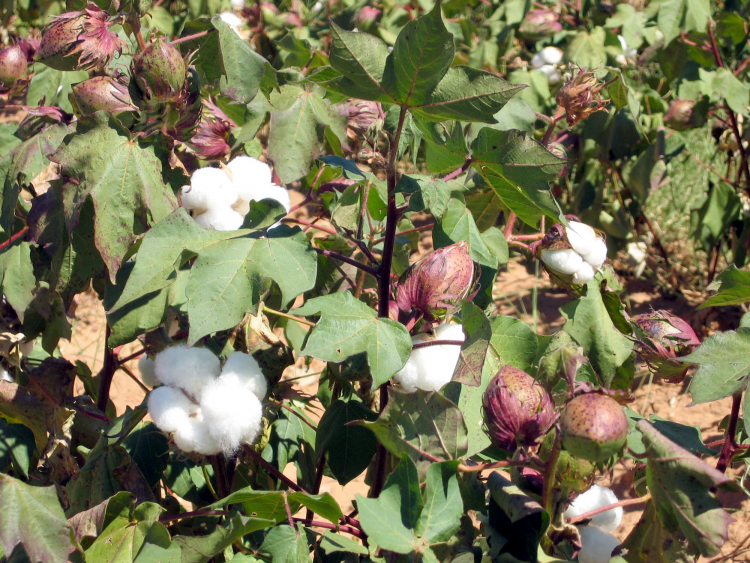
Vividly I learning about the importance of cotton in American history classes as a youth. The Industrial Revolution and Eli Whitney’s cotton ginfueling demand for clothes made from cotton gave a young American nation the economic muscle it needed to compete against its European rivals. The simple phrase “Cotton is king” has resounded to well throughout the decades that they even made a joke about it on Seinfeld!
In May the US Department of Agriculture released The Great American Cotton Plan, a blueprint for making cotton king again. “America's cotton growers continue to face the crushing combination of rising input costs and an increase in synthetic material, while also being squeezed by foreign competitors who can sell their fibers at lower prices due to unfair trade practices,” the plan reads.
In 2023, America lost its status as the world's top cotton exporter to Brazil. While we are generally happy to see the success of our friends in the Western Hemisphere compared to – say – China (more on them later), if America happened to be No. 1 and Brazil was the No. 2 exporter, then we’ll do that.
A renewed, 21st Century emphasis on cotton is in response to the health and environmental problems that have emerged from overreliance on synthetics. Both the USDA and Health and Human Services are promoting the “Plant Not Plastic” initiative to encourage consumers to choose products made with American cotton rather than something microplastics.
Congress is advancing legislation to put the USDA’s plan into law with the bipartisan Buying American Cotton Act. The bill was introduced by Rep. Greg Murphy (R-NC) and has 76 cosponsors – which means almost 20 percent of the House of Representatives supports the bill already. That level of enthusiasm in Congress is rare but rare still is its bipartisan support: 29 cosponsors are Democrat, 47 are Republican. The companion piece in the Senate was introduced by Sen. Cindy Hyde-Smith (R-Miss.) and has 17 cosponsors – so again almost 20 percent.
In a statement announcing the bill, Murphy said, “American cotton growers, especially those in Eastern North Carolina, play a critical role in our nation's farm economy. They help supply countless industries with high-quality raw material to produce clothing, home goods, industrial and medical products, and much more. Global competition has made survival for our cotton growers difficult, straining rural communities and destabilizing our supply chain.”
Now of course members of Congress need to highlight both their home district in press releases like that – certainly the 76 cosponsors doubtless have said similar things about the bill is uniquely good for cotton growers at home. But cotton farms in any part of the US are better to support than in any part of China, where labor standards are probably even worse than they were in pre-antebellum South when cotton was king.
About 90 percent of the cotton that comes out of China is from Xinjiang,home of the world-famous Uighur concentration camps. The human rights abuses (bordering on genocide) have been extremely well documented, so there’s no reason to go in great detail here. Suffice it to say that there’s a 90% chance that any cotton out of China has Xinjiang fibers in it, meaning they were collected by slave labor. There are so many other industries such as solar or electronics or others that are tainted by bigger human rights abuses in China.
Part of The Great Cotton Plan is weening American industry off of Chinese textile factories by strengthening relationships with other Asian countries. The United States Trade Representative (USTR) has won agreements with for Indonesia and Bangladesh to use exclusively American cotton in exchange for tariff relief.
This is the thing that so-called progressives fail to understand about the President’s use of tariffs and onshoring: anything produced under the umbrella of the United States’s benevolence enjoys the best labor standards in human history; anything produced under the evil Chinese government does not.
Ironically U.S. Cotton – a subsidiary of Parkdale Mills – which has lobbied for more tariffs to protect domestic industries, has hypocritically continued to import Chinese cotton over domestic cotton.
Moreover, the incompetent Chinese government has no plan for the record rainfall in Xinjiang, which threatens to damage all agriculture across the region. All the more reason to continue divorcing our economy from China and bringing as much industry as possible back to the Western Hemisphere.
Cotton played an integral part of America’s economy as a fledgling nation; as we continue the rebirth of making America great again, cotton can play an even more important role now.
Jared Whitely is a longtime DC politico, having worked in the US Senate, White House, and defense industry.
Read Full Article »