


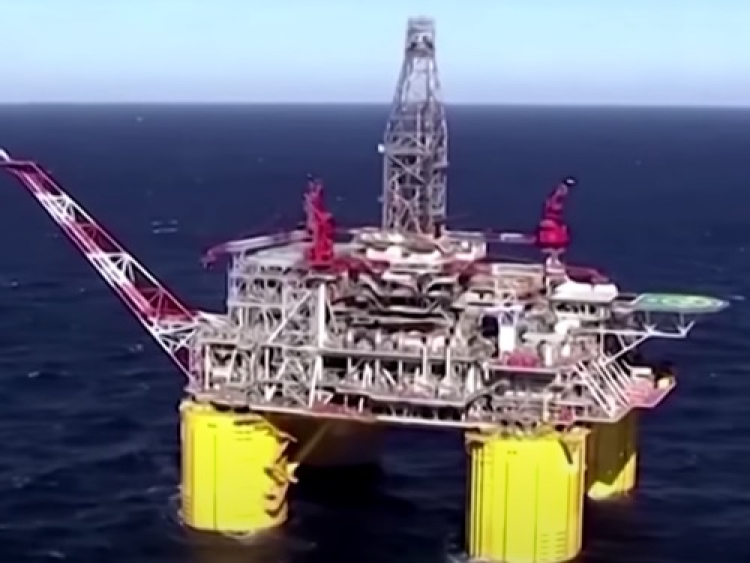
Four years after TotalEnergies vacated its Afungi site in northern Mozambique amid civil unrest, the company restarted its $20 billion liquefied natural gas project. The gas had not moved. The geology had not improved. What changed sat 8,000 miles away at the U.S. Export-Import Bank, where a newly appointed board reauthorized a $4.7 billion loan that had been gathering dust.
With every day, a surge in oil and gas development is becoming the norm across Africa. Two factors are responsible for the change in the continent’s energy politics. The first came from Washington. The second followed in financial markets, boardrooms, and governments around the world.
U.S. Administration Spurs Energy Proliferation
The unlocking began on January 20, 2025, when the White House issued Executive Order 14154, "Unleashing American Energy." The order made energy abundance an explicit instrument of American statecraft. It ordered every agency to hunt down and dismantle rules constructed around emissions targets, to weigh affordability ahead of carbon accounting, and to promote the export of American fuels and equipment.
Two further moves compounded the effect. Washington began its exit from the Paris Agreement, which stripped federal agencies of any obligation to screen their financing against treaty targets and demoted the “carbon footprint” from a gatekeeping criterion to a memory.
The same executive order directed the termination and review of American international climate finance pledges, which meant less federal money steered into overseas renewable schemes and far less arm-twisting of poor countries told to abstain from the fuels that built every rich one.
What is the downstream effect? The Export-Import Bank now entertains financing for fossil-energy equipment it once treated as radioactive. The U.S. International Development Finance Corporation no longer treats a hydrocarbon project as automatically ineligible. The U.S. Trade and Development Agency can fund feasibility work for conventional power.
Capital Emerged When Climate Politics Was Sidelined
NJ Ayuk of the African Energy Chamber called the change in Washington "a pivotal moment for Africa's fossil fuel industry" and argued that with foreign interference removed, the continent can finally pursue gas for export, coal where its own grids demand it, and offshore development at scale.
The African Energy Chamber's 2026 outlook puts continental upstream spending at roughly $41 billion this year against global exploration and production capital of about $504 billion.
Shell and Equinor have hammered out commercial terms for a $42 billion export hub at Lindi in Tanzania. Egypt locked in a $35 billion regional supply arrangement with Chevron and Israel's NewMed Energy. ExxonMobil and Azule Energy are drilling Angola's Namibe and Orange basins, with an expected investment of around $20 billion.
In Mozambique, TotalEnergies, ExxonMobil and Eni have committed close to $41.9 billion to gas, including Eni's $7.2 billion Coral North floating facility and Exxon's $30 billion Rovuma scheme. Uganda and Tanzania have mobilized more than $15 billion with TotalEnergies, CNOOC and Alpha MBM. Vitol paid $1.65 billion for a 30% stake in Eni's Ivorian and Congolese offshore assets. Off Mauritania and Senegal, BP and Kosmos spent between $3 billion and $5 billion.
Energy Ending Generational Poverty
U.S. Energy Secretary Chris Wright has been blunt about why these investments matter. Speaking at the Powering Africa Summit, he told African leaders his government had "no desire to tell you what you should do with your energy system" and dismissed the opposite instinct as a post-colonial reflex he cannot stomach.
He framed the purpose plainly: "The only goal of energy is to expand human opportunity." He has since pressed the point on cooking fuels, calling African deaths from indoor smoke a solvable problem of pipes, tanks and stoves rather than a tragedy to be endured while the world waits for better batteries.
Every gas terminal, pipeline and power plant translates into welding jobs, apprenticeships, health clinics, functioning schools, and factories that pay wages. The boy in Cabo Delgado and the girl in Rivers State are the first generation with a plausible route out of poverty their grandparents never had, and that pathway runs through the hydrocarbons their economies require.
Vijay Jayaraj is a Science and Research Associate at the CO2 Coalition, Fairfax, Virginia. He holds an M.S. in environmental sciences from the University of East Anglia and a postgraduate degree in energy management from Robert Gordon University, both in the U.K., and a bachelor’s in engineering from Anna University, India. He served as a research associate with the Changing Oceans Research Unit at University of British Columbia, Canada.
Read Full Article »