Don’t Blame Credit Card Fees for Pain at the Pump
X
Story Stream
recent articles

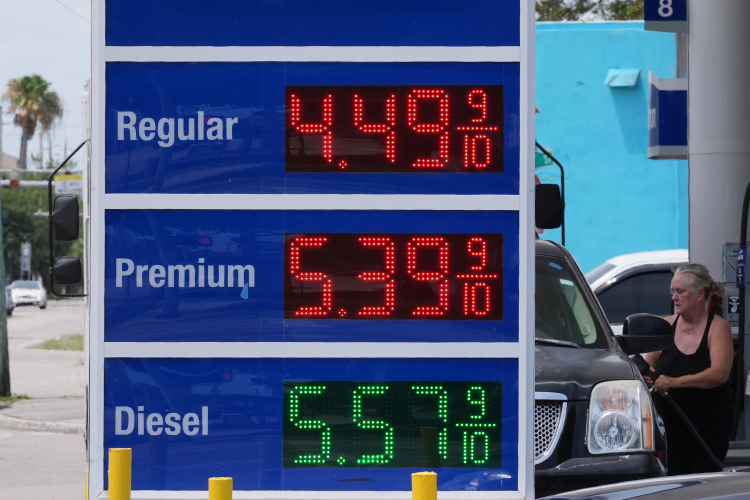
Gas prices are extraordinarily high—and rising. The price at the pump per gallon is now nearly $4.50 according to the American Automobile Association. These skyrocketing prices have a lot to do with geopolitical issues, as well as out-of-control climate litigation and more mundane causes like seasonal fluctuation

Some imply that credit card interchange fees—which are paid by merchants to support payment networks—are a major part of the price of gas. For example, Merchants Payments Coalition Executive Committee member and National Association of Convenience Stores General Counsel Doug Kantor recently stated that credit card issuers “are collecting more on every gallon and profiteering on the backs of American motorists. Swipe fees drive up the price of gas in the family car.” This untrue talking point is being used to support heavy-handed credit card regulations, which will harm consumers across the country. Policymakers must reject credit card mandates and focus on real measures to lower the price of gas.

Interchange fees are a tiny component of the price of gas. While Sen. Roger Marshall (R-Ks.) says that “Today, Americans will spend $58,226,000 on swipe fees at the pump,” Americans spend $1.7 billion total at the pump per day. Big numbers sound scary until considered in the context of far larger numbers. And even the relatively small amount that Americans spend on interchange fees at the pump goes a long way toward protecting payment networks.

Fraud is already a problem in financial services markets, with identity theft posing a constant threat to consumers. Credit card fraud cost consumers $275 million in 2024, up from $45 million in 2015. Less than 10 percent of phony charges involve stolen or lost credit cards; the rest involve remotely accessed account information and personal data. This remote theft will become far easier for cyber-criminals if credit card mandates—along the lines of Sens. Dick Durbin (D-Ill.) and Marshall’s Credit Card Competition Act (CCCA)—are enacted.

Financial crime is devastating enough as a fraction of 1 percent share of all purchases. Compromising credit card networks through mandates would increase that percentage, making millions of Americans think twice before swiping or tapping their cards.

Additionally, eliminating interchange fees through credit card mandates would wreak havoc on the rewards that millions of Americans depend on. More than 7 in 10 Americans have a rewards credit card—using cash back, travel points, and airline miles to help manage household budgets and offset rising costs.

For all this disruption, consumers would not see lower prices from credit card mandates, because any interchange changes flow to mega-retailers, not families. After all, the “Dubin Amendment” to the 2010 Dodd–Frank Wall Street Reform and Consumer Protection Act, which foisted restrictions on debit cards with a similar aim to the CCCA, did not lower fees. The vast majority of merchants—who the Durbin Amendment was designed to help—did not report lower costs or debt.

Rather than trying to micromanage interchange fees, policymakers can take real steps toward reducing gas prices. Out-of-control climate litigation is a far more important contributor to high gas prices than interchange fees. For example, cities such as Baltimore and environmental groups such as the Sierra Club have been taking energy producers to court for allegedly contributing to the (global) problem of climate change. Costly settlements and payouts are then passed along to consumers. Fortunately, members of Congress are determined to put a stop to this costly litigation. Sen. Ted Cruz (R-Tex.) and Rep. Harriet Hageman (R-Wy.) recently introduced the Stop Climate Shakedowns Act of 2026, which would bar climate-related suits from being “filed or maintained in any Federal or State court” and prevent states from requiring energy producers to pay climate-related penalties.

Lawmakers can address the real causes of high gas prices and alleviate pain at the pump. Singling out interchange fees will only succeed in making Americans less safe and prosperous.

Ross Marchand is the executive director of the Taxpayers Protection Alliance.

Gas prices are extraordinarily high—and rising. The price at the pump per gallon is now nearly $4.50 according to the American Automobile Association. These skyrocketing prices have a lot to do with geopolitical issues, as well as out-of-control climate litigation and more mundane causes like seasonal fluctuation
Some imply that credit card interchange fees—which are paid by merchants to support payment networks—are a major part of the price of gas. For example, Merchants Payments Coalition Executive Committee member and National Association of Convenience Stores General Counsel Doug Kantor recently stated that credit card issuers “are collecting more on every gallon and profiteering on the backs of American motorists. Swipe fees drive up the price of gas in the family car.” This untrue talking point is being used to support heavy-handed credit card regulations, which will harm consumers across the country. Policymakers must reject credit card mandates and focus on real measures to lower the price of gas.
Interchange fees are a tiny component of the price of gas. While Sen. Roger Marshall (R-Ks.) says that “Today, Americans will spend $58,226,000 on swipe fees at the pump,” Americans spend $1.7 billion total at the pump per day. Big numbers sound scary until considered in the context of far larger numbers. And even the relatively small amount that Americans spend on interchange fees at the pump goes a long way toward protecting payment networks.
Fraud is already a problem in financial services markets, with identity theft posing a constant threat to consumers. Credit card fraud cost consumers $275 million in 2024, up from $45 million in 2015. Less than 10 percent of phony charges involve stolen or lost credit cards; the rest involve remotely accessed account information and personal data. This remote theft will become far easier for cyber-criminals if credit card mandates—along the lines of Sens. Dick Durbin (D-Ill.) and Marshall’s Credit Card Competition Act (CCCA)—are enacted.
Financial crime is devastating enough as a fraction of 1 percent share of all purchases. Compromising credit card networks through mandates would increase that percentage, making millions of Americans think twice before swiping or tapping their cards.
Additionally, eliminating interchange fees through credit card mandates would wreak havoc on the rewards that millions of Americans depend on. More than 7 in 10 Americans have a rewards credit card—using cash back, travel points, and airline miles to help manage household budgets and offset rising costs.
For all this disruption, consumers would not see lower prices from credit card mandates, because any interchange changes flow to mega-retailers, not families. After all, the “Dubin Amendment” to the 2010 Dodd–Frank Wall Street Reform and Consumer Protection Act, which foisted restrictions on debit cards with a similar aim to the CCCA, did not lower fees. The vast majority of merchants—who the Durbin Amendment was designed to help—did not report lower costs or debt.
Rather than trying to micromanage interchange fees, policymakers can take real steps toward reducing gas prices. Out-of-control climate litigation is a far more important contributor to high gas prices than interchange fees. For example, cities such as Baltimore and environmental groups such as the Sierra Club have been taking energy producers to court for allegedly contributing to the (global) problem of climate change. Costly settlements and payouts are then passed along to consumers. Fortunately, members of Congress are determined to put a stop to this costly litigation. Sen. Ted Cruz (R-Tex.) and Rep. Harriet Hageman (R-Wy.) recently introduced the Stop Climate Shakedowns Act of 2026, which would bar climate-related suits from being “filed or maintained in any Federal or State court” and prevent states from requiring energy producers to pay climate-related penalties.
Lawmakers can address the real causes of high gas prices and alleviate pain at the pump. Singling out interchange fees will only succeed in making Americans less safe and prosperous.
Ross Marchand is the executive director of the Taxpayers Protection Alliance.


Comment
Show comments Hide Comments